Since 1972, the nineteenth-century plantation house that sits in the middle of Arlington National Cemetery has been designated by Congress as “Arlington House, The Robert E. Lee Memorial.” But in recent years a group of descendants and advocates has been working to change that name.
A petition to redesignate the mansion as “Arlington House National Historic Site” now has nearly 5,500 signatures, including at least one signer from every Congressional district in the country. And in the current Congress, Representative Don Beyer (D-VA) and Senator Tim Kaine (D-VA), along with more than 120 co-sponsors from 23 states in the House of Representatives, have taken the lead in propelling this movement forward, introducing a joint resolution to redesignate the site.1
In my March 2026 article for the Journal of the Civil War Era, I wrote about the dedicated “Family Circle” of descendants who have been working to advance this cause. It is part of their larger effort to ensure that visitors to Arlington House learn a complete history of the plantation, the Confederacy, and slavery, as well as the stories of all the families who once lived at the site.2
That includes the families of George Washington Parke Custis, the house’s first owner; his son-in-law Robert E. Lee, who was living there when he decided to take up arms against the federal government; and the families of those who were enslaved by the Custises and Lees, including the Branham, Gray, Henry, Norris, Parks, and Syphax families. The descendants’ work, I argued, continues a long tradition of African American “kinkeepers” at Arlington, and they are determined to press on. As an update on the redesignation petition recently emphasized: “We Arlington House descendants remain committed to seeing this effort through.”3
Their task will not be easy, to be sure. But the hard work ahead might be helped by a long look back, especially at the history of how “Arlington House” became “The Robert E. Lee Memorial” in the first place. In this post, drawing on new research not included in my March 2026 article, I will argue that there was nothing inevitable about the transformation of Arlington House into a Lee shrine. Instead, the “Robert E. Lee Memorial” was the product of deliberate choices made only in the last 100 years, after persistent lobbying by interest groups who did not always agree. And a careful look at that history reveals three important facts about the history of Arlington House that are not widely known:
- In its early years as a historic site, before it became a Lee memorial, the Department of War didn’t hide slavery at Arlington House.
- The Congressman who sponsored a “permanent memorial” to Lee in 1955 opposed the Civil Rights Movement.
- The primary lobbyists for the house’s current name came from only one of the families whose ancestors lived and labored at Arlington House: the Lees.
Let’s examine each of these facts in turn.
1. In its early years as a historic site, before it became a Lee memorial, the Department of War didn’t hide slavery at Arlington House.
In our current moment of culture war and political polarization, it may be all too easy to assume that the effort to foreground slavery at national historic sites is a recent, revisionist innovation. In the case of Arlington House, however, that is not true. In fact, a century ago, one of the first things visitors to Arlington House would have encountered was an unflinching depiction of slavery.
As early as 1892—in the hallway of the sparely furnished house, near a guest book for visitors—there hung a framed copy of an 1876 speech by veteran and freethinker Robert G. Ingersoll, and it included these lines:
The past rises before us, and we see four millions of human beings governed by the lash—we see them bound hand and foot—we hear the strokes of cruel whips—we see the hounds tracking women through tangled swamps. We see babes sold from the breasts of mothers. Cruelty unspeakable. Outrage infinite!
Four million bodies in chains—four million souls in fetters. All the sacred relations of wife, mother, father, and child trampled beneath the brutal feet of might, and all this was done under our own beautiful banner of the free.4
These are lines that would not be out of place in a serious contemporary museum about slavery like the Equal Justice Initiative’s Legacy Sites in Montgomery, Alabama, or the Whitney Plantation in Louisiana. So it may seem surprising that they were posted at Arlington House before the turn of the twentieth century, at the height of Jim Crow.
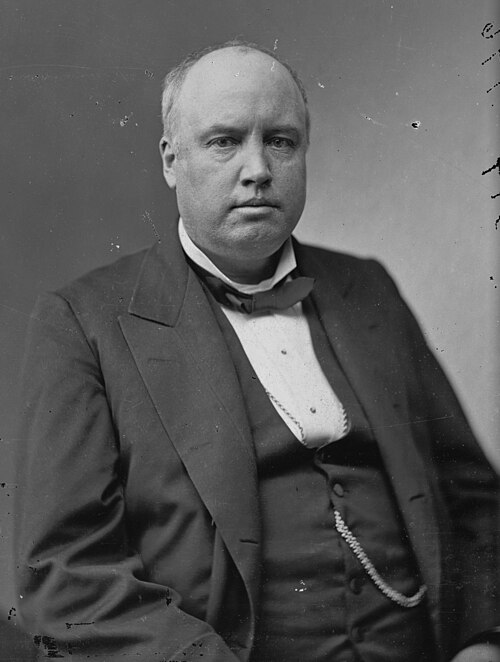
(Figure 1: Robert G. Ingersoll (circa 1865-1880). Source: Wikimedia Commons)

But Ingersoll’s speech was a favorite of Union veterans at the time; it was often reprinted in northern newspapers around Decoration Day, the precursor of Memorial Day. For decades following the Civil War, Arlington House was controlled by the Department of War and was used primarily as offices and living quarters for staff at the national cemetery expanding around it. Many of the cemetery’s graves belonged to U.S. soldiers who had died in the war that ultimately destroyed the institution depicted in Ingersoll’s lines. So in that landscape of national patriotism, Ingersoll’s speech fit right in. His oration went on to argue that the true meaning of the Civil War could be found in its securing of liberty for all, redeeming the national flag. It embodied a still powerful “emancipationist” memory of the war that a broader culture of sectional reunion had not snuffed out.5
From the start, however, there were visitors who did not like that slavery was called out for censure in the house where Lee once lived. Indeed, opposition to the display of Ingersoll’s speech helped to fuel the very first campaign to transform the house into a Robert E. Lee memorial—a transformation that sought to suppress the discussion of slavery at the site from the beginning.
In 1897, for example, a letter to the Baltimore Sun denounced Ingersoll’s passage as a “disgrace” that should be taken down in the interest of sectional harmony. For this Maryland writer, as for many white Americans, postwar reconciliation between north and south called for silence and circumspection about slavery. The correspondent to the Sun wondered what the son of a Confederate veteran might think when, after bending over the visitor’s book, “he turns from recording his name to see on the wall before him such a picture of the past as Ingersoll’s words present?”6
That scenario was not hypothetical. Several years later, Clarence J. Owens, a South Carolina educator who would later serve as Commander-in-Chief of the United Sons of Confederate Veterans, visited the house at Arlington and was shocked by what he saw. In a letter to the editor of a South Carolina newspaper after returning home, Owens complained at length about “The Inscription at Arlington,” which he had copied into a notebook with his own immediate reaction: “a miserable lie!”7
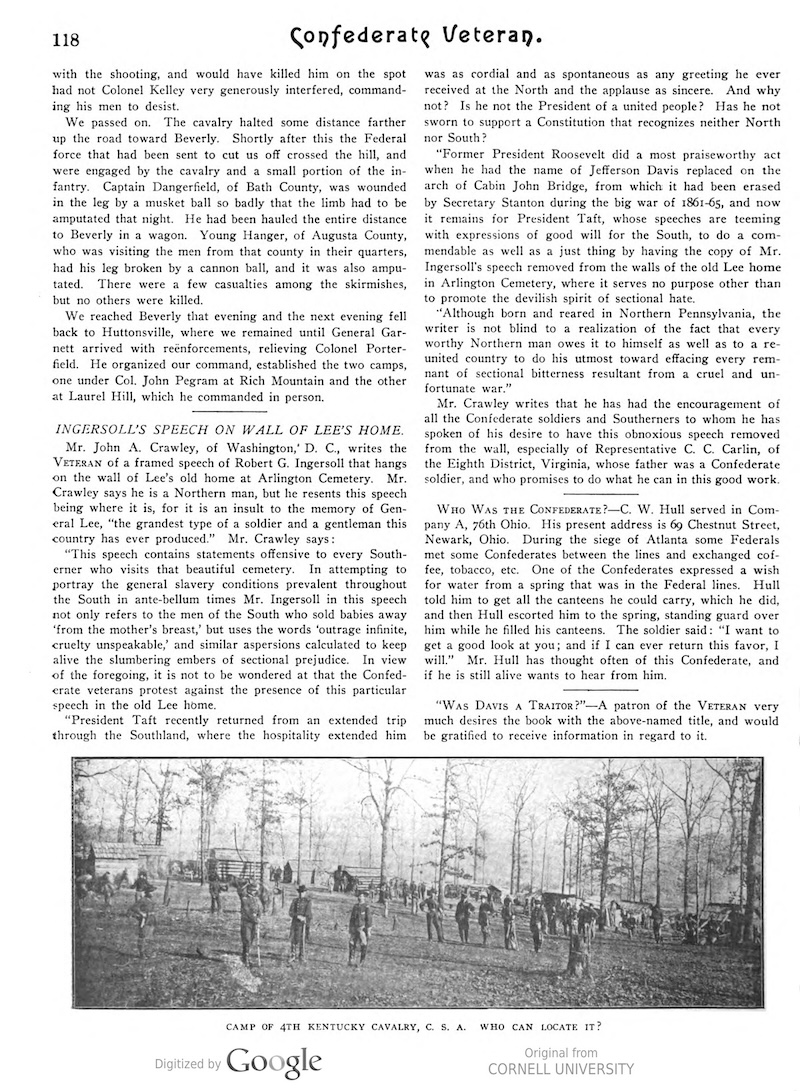
Owens also sent a letter directly to the War Department in 1903, launching a pressure campaign against the Ingersoll speech that would continue for years. In 1909, members of the United Sons of Confederate Veterans appealed directly to President William Howard Taft. They claimed that Ingersoll’s depiction of slavery was “a great injustice to the South and her people,” who wished only “to truthfully perpetuate the facts.” One editorial from Macon, Georgia, argued that slavery was “as humane as the conditions would allow” and that Ingersoll’s speech was “neither the language nor the truth of history, but the impassioned oratory which exaggerates without conscience for the sake of effect.”8
In today’s terms, it was woke.
(Figure 2, below: A report from the Confederate Veteran magazine in 1910 typified the complaints about Ingersoll’s speech.)
Nonetheless, Ingersoll’s lines on slavery remained in place at Arlington House for a total of at least 35 years. By 1909 the Department of War had already received at least three take-down requests from the United Sons of Confederate Veterans since 1903. Yet each one was denied, as was the latest petition.
Although Confederate heritage groups suggested that talking about slavery was divisive, officials in the War Department clearly disagreed. As Elihu Root, the Secretary of War under Republican president Theodore Roosevelt, told Owens in reply to the southerner’s original complaint, “I beg to inform you that in the opinion of this Department there is nothing in the [Ingersoll] extract referred to calculated to engender sectional feeling.”9
Confederate partisans were somewhat mollified when Taft approved of plans for a Confederate Memorial in Arlington National Cemetery, which was later installed during Woodrow Wilson’s presidency. But they did not give up on the effort to remake the plantation house as a shrine to Lee. A new chapter in Arlington House’s history opened in 1921, when the Virginia-born journalist Frances Parkinson Keyes joined up with the United Daughters of the Confederacy (UDC) in a campaign to lobby Congress for that purpose. By 1924, they had succeeded in convincing Louis C. Cramton, a Michigan congressman and son of a Union veteran, to introduce a Congressional resolution to promote national reunion by honoring Robert E. Lee at Arlington House. Cramton’s resolution, which referred to the house as the “Lee Mansion,” “authorized and directed” the Secretary of War to renovate the building and refurnish it to look as it did during the few years, immediately before the Civil War, when Lee had lived there with his family.10
Cramton’s resolution reflected a growing sentiment of reconciliationism in the early twentieth century, which encouraged white Americans north and south to move past the sectional strife that had led to the Civil War. But as historian David Blight has shown, these efforts at sectional reconciliation prevented Americans from grappling honestly with what Frederick Douglass called “the moral character of the war.” As Douglass warned in 1878, “There was a right side and a wrong side in the late war, which no sentiment ought to cause us to forget, and while to-day we should have malice toward none, and charity toward all, it is no part of our duty to confound right with wrong, or loyalty with treason.” Unfortunately, the very confusions Douglass warned against were increasingly common fifty years later. Praising good men on “both sides” meant denying the true history of slavery and sidestepping its legacies in the Jim Crow era.11
That was true with the “Lee Mansion” bill, as well. The UDC women who championed Cramton’s resolution were not just concerned about sectional reunion or accurate period furniture at Arlington House. They were also driven partly by older grievances, particularly about Ingersoll’s discussion of slavery displayed there.
At a committee hearing on the bill held in May 1924, Charles Moore, the influential chairman of the National Commission of Fine Arts, stated that he had met several times with Keyes and UDC members, who relentlessly pressed him about their problems with the existing site. Among their sticking points, he testified, was “an extract from one of Bob Ingersoll’s fiery speeches that has been framed and stands on one of the mantels.”12
The resolution authorizing the restoration of the “Lee Mansion” was passed in January 1925 and signed by President Calvin Coolidge in March, though not without objections. Before and after its passage, U.S. veteran groups like the Grand Army of the Republic and newspapers like the Baltimore Afro-American vocally opposed the move. And even the bill’s passage initially seemed like it might be a Pyrrhic victory for Lee partisans. Three more years would pass before Congress provided appropriations for the house’s renovation, while powerful stakeholders tasked with implementing the law, including Moore, deliberately dragged their feet on the project. As Moore noted, the house had never belonged to Lee, who lived there for only a short part of the house’s antebellum life. (The house’s original owner, George Washington Parke Custis, had bequeathed the plantation to his daughter Mary Custis Lee upon his death in 1857. The Lees, who married in 1831, spent less than one-third of their married life together at Arlington House.) The Commission of Fine Arts thus stated bluntly in an annual report to Congress that it would be “a mistake in history and in good taste to undertake to emphasize Arlington House as the home of Gen. Robert E. Lee.”13
In short, the effort to tie Arlington House exclusively to Lee was contested and resisted by many Americans from the beginning. And such resistance frustrated the 1925 restoration bill’s champions—as did the fact that, as of May 1926, Ingersoll’s hated lines about slavery still remained on display in the house!
That month a Mississippi Democrat, Rep. John E. Rankin, wrote a public letter to the Secretary of War demanding yet again that the lines be taken down.
“The speech preserved in Lee’s mansion,” Rankin complained, “contains language that is a false arraignment of the Southern people,” and he singled out its passages about whips, hounds, and “babes sold from the breasts of mothers.” Like those trying to remove exhibits on slavery a century later, Rankin wanted a more positive portrait that did not disparage Lee and the Confederates. Remarkably, however, his effort fared no better than that of Clarence J. Owens in the short term. The Secretary of War ruled—again—that the Ingersoll speech would stay. In 1928, Rankin was still complaining about its presence at the mansion.14
Soon thereafter, though, the Ingersoll speech did finally come down, and when it did, a lifetime would pass before something like it would appear on the walls of Arlington House again.
Congressional appropriations for restoring the building to look like Lee’s home were ultimately passed beginning in 1928, and the framed passage in the entryway probably fell during “the removal of modern improvements” to the house. But even if the speech briefly survived that “general discard,” it was quickly overshadowed by the antebellum antiques that soon crowded the building’s rooms. To implement Congress’s order, the government called on private donors—many of them southerners from elite white families—to supply the house with period furniture and heirlooms. And in the process, the restoration project marginalized any discussion of the real issues at stake in the Civil War.15
The renovation did create the first significant opportunity for the families of those who had been enslaved at Arlington House to be consulted about the site. Members of enslaved housekeeper Selina Gray’s family, for instance, provided some furnishings and shared what they knew about the layout of the house during the Lees’ residence. But refurnishing the plantation house primarily enabled white designers to paint a very different picture of slavery than that sketched by Ingersoll.16
New stories about and around the site portrayed enslaved people like Gray as faithful servants who tried to protect the Custis and Lee families’ possessions from Yankee marauders, while other stories turned James Parks, another longtime African American resident of Arlington who died in 1929, into a genial “Uncle Jim” noted for his faithful, “respectful” service.17
Slowly but surely, as a result, Ingersoll’s opponents got what they had always wanted at Arlington House: the replacement of his stark vision of the cruelty and outrage of enslavement with a Lost Cause fantasy of loyal, happy “servants.”
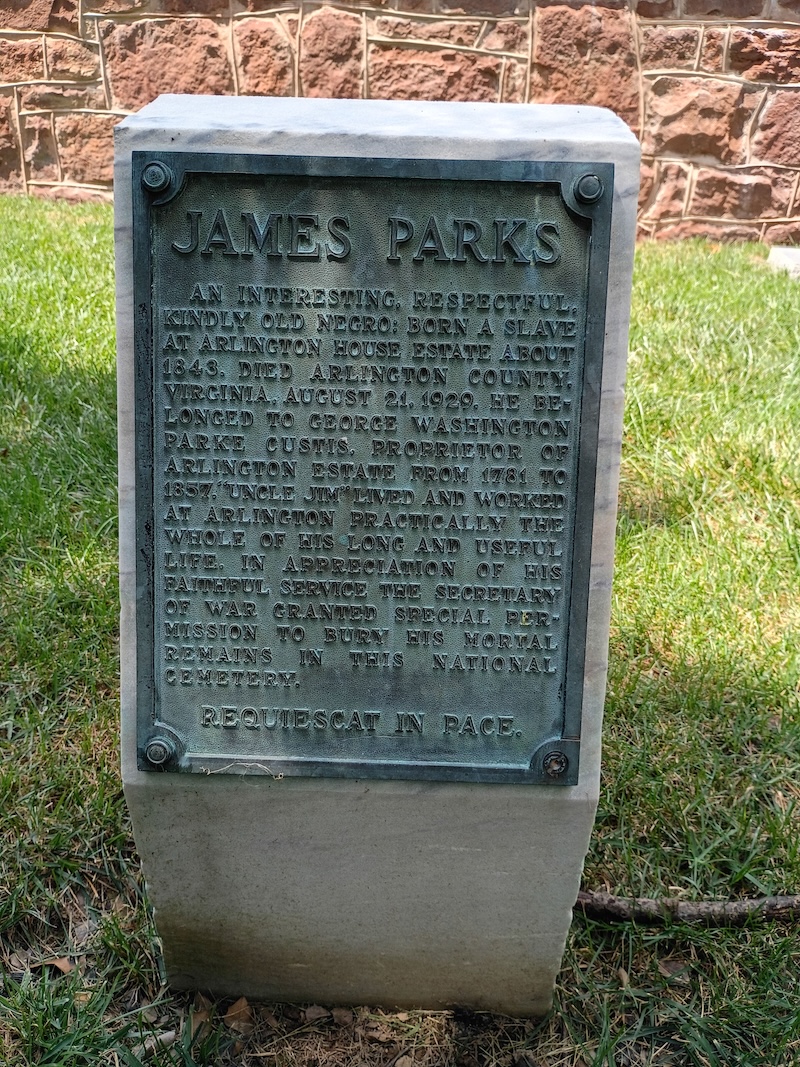
(Figure 3: A tombstone marking the gravesite of James Parks at Arlington describes him as “Uncle Jim” and praises his “faithful” service. Source: Find a Grave.)
Meanwhile, most Americans would forget that before the historic site ever became a shrine to Robert E. Lee, its original managers in the War Department had not shied away from hard truths about slavery. As we have seen, that was precisely why Lee partisans had wanted the house to change. From the beginning, the struggle to make the house all about Lee was part of a larger effort by Confederate heritage groups to promulgate their views, thus forestalling an honest reckoning with the legacies of American slavery, the Civil War, and racial injustice.
2. The Congressman who sponsored a “permanent memorial” to Lee in 1955 opposed the Civil Rights Movement.
The move away from forthright discussions of slavery at Arlington House continued after control of the site passed from the Department of War to the Department of the Interior and the National Park Service (NPS) in 1933. In contrast with the army’s resolute defense of the Ingersoll speech, an early NPS guidebook described George Washington Parke Custis, the plantation house’s first owner, as “an easygoing master, requiring little of his slaves.”18
Moreover, as early as 1937, the NPS began referring to Arlington House in its publications as “the Lee Mansion National Memorial.” This new name followed the usage of some local tourism boosters, but NPS officials often went farther by claiming, incorrectly, that the 1925 legislation to restore the house had given it this title. In reality, while Cramton did speak at the 1924 committee hearing about his desire to create “a standing memorial to a noted American,” the joint resolution itself never called the house a “National Memorial.”19
But in 1955, a joint Congressional resolution cosponsored by Rep. Joel T. Broyhill (R-VA) did aim to make the memorial purpose of the house official. It declared that the house would now be called the “Custis-Lee mansion” and “dedicated as a permanent memorial to Robert E. Lee.”
The entry of Broyhill into this story is especially significant to the current renaming debate, because the Virginia Republican would also later sponsor the 1972 resolution that gave the site its current official name. But before turning to that critical law, it is important to ask why Broyhill, a conservative Republican whose district included Arlington House, thought the site deserved special memorialization in 1955.
Answering that question requires a close look at both the text and the context of the 1955 resolution.
In their preamble, Broyhill and his Senate co-sponsor, Estes Kefauver, Democrat of Tennessee, noted that the 1925 law had neglected to make the “memorial” purpose of the house’s restoration explicit. They described their reason for doing so now on grounds similar to those used by Cramton thirty years before: honoring Lee would supposedly symbolize the unity that the nation had achieved since the end of the Civil War. The resolution passed both chambers without serious discussion, and it became Public Law 84-107 in June 1955. According to the resolution, that year was significant as the ninetieth anniversary of Lee’s surrender to Ulysses S. Grant.
But recent events arguably provided a more immediate and illuminating context for the 1955 resolution.
In 1954, the Supreme Court’s desegregation ruling in Brown v. Board of Education had just overturned the doctrine of “separate but equal” schools, striking a blow at one of the major vestiges of slavery in American public life. In the solidly Democratic South, where the Democratic Party at the time still stood behind segregation, segregationists lashed out at the Brown decision and began laying groundwork for a popular movement of “massive resistance” to federal integration orders, often draping themselves in the iconography and mythology of the Confederacy. And southern Democrats were soon joined in this reactionary movement by a handful of Republicans.
One of them was Joel Thomas Broyhill (1919-2006).
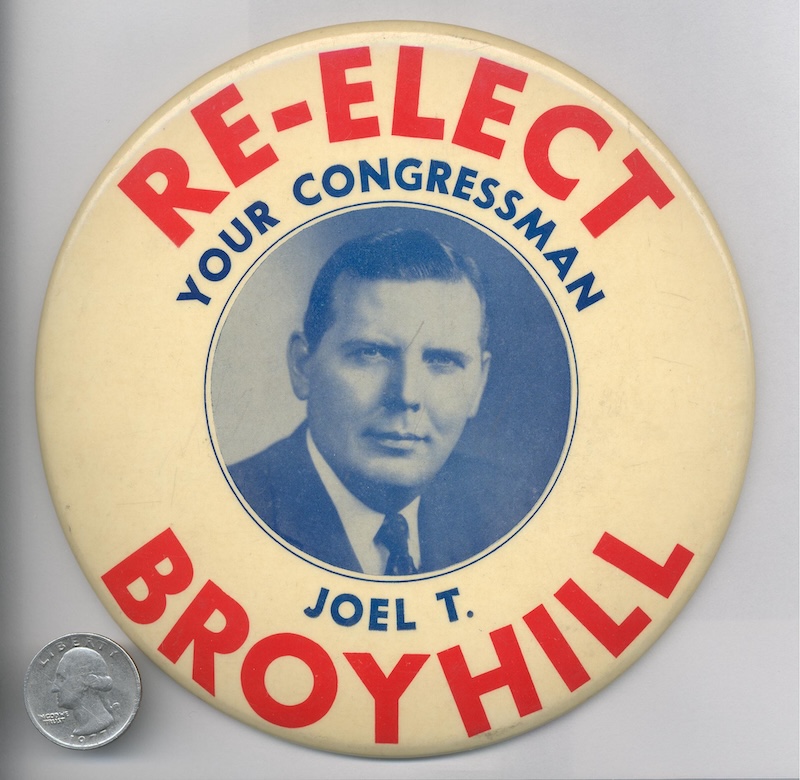
(Figure 4: A campaign button for one of Broyhill’s reelection campaigns is preserved by the U.S. Capitol Historical Society. Broyhill was first elected to Congress in 1952.)
For a southern Republican like Joel T. Broyhill, the Brown decision posed a tricky political challenge. Republican President Dwight D. Eisenhower indicated that he would obey the Court’s orders. But Broyhill disagreed with his party’s leader. When asked his opinion about Brown in the fall of 1954, the Virginia congressman said that “I am inherently a State’s Righter.” Then, in March 1956, Broyhill became one of only four Republicans to sign the Southern Manifesto, a notorious public statement signed by 101 Congressmen who swore to defy the Supreme Court’s integration orders.20
In the meantime, Broyhill had been working on the resolution to create a permanent memorial to Robert E. Lee. On January 12, 1955, while speaking to a group of young Republicans, Broyhill decried the rising threats of “leftwingism,” predicted future success for his party in Dixie, and told the crowd, “save your Confederate money, folks, the South will rise again.”21
Five months later, he introduced the House version of the Lee memorial resolution.
The timing was surely no coincidence and makes it impossible to separate Broyhill’s 1955 resolution from his simultaneous resistance to civil rights. For the rest of his career in Congress, which lasted until 1974, Broyhill would remain a staunch critic of civil rights activism and what he called “forced integration.” Broyhill chastised the NAACP in Virginia for “constantly harassing and banging us in an effort to force integration” in schools. And in December 1956, he voted with the majority of a Congressional subcommittee on D.C. schools that called for their resegregation, on the grounds that court-ordered integration had happened too quickly. When explaining why he favored a plan to assign students to schools based on their aptitude, he claimed that this would result in “a higher degree of segregation” without running afoul of court orders. Broyhill voted against the Civil Rights Acts of 1957 and 1964, as well as the Voting Rights Act of 1965, and in 1957 he led four other southern Republicans in appealing to President Eisenhower to withdraw federal troops from Little Rock, Arkansas, where they were enforcing the desegregation of Central High School. As an ally of Richard Nixon, Broyhill reflected the Republican Party’s larger “Southern Strategy,” an effort to bring white southern voters disaffected by the Democratic Party’s turn toward civil rights into the GOP.22
Meanwhile the Virginia Congressman would remain, among all his colleagues in the House or Senate, the member who was most actively involved with legislation about Arlington House. This was in part because the house was in his district, but it was also because his 1955 resolution and conservative politics had identified Broyhill as a willing partner for groups with their own agendas for the site.
In 1959, for example, at the request of the Society of the Lees of Virginia, Broyhill shepherded through Congress a law to ensure that the gardens at the mansion never became gravesites.23 And then, a few years later, the same society, made up of Lee descendants, approached Broyhill with another fateful request.
They wanted him to change the name of the “Custis-Lee Mansion” back to the historic name by which it was known to its original inhabitants: “Arlington House.”
3. The primary lobbyists for the house’s current name came from only one of the families whose ancestors lived and labored at Arlington House: the Lees.
The primary leader of the effort to change the name of the “Custis-Lee Mansion” back to “Arlington House” was Eleanor Lee Templeman (1906-1990), a locally influential Arlington historian and genealogist who also served as the longtime secretary of the Society of the Lees of Virginia, an exclusive group of Lee descendants founded in 1921.
As early as January 1961, Templeman (a descendant of Robert Bland Lee, the uncle of Robert E. Lee) had written a letter to the editor of a local newspaper about the problems with the name “Custis-Lee Mansion.” She argued that neither Custis nor Lee would have referred to the house this way, any more than George Washington would have called Mount Vernon the “Washington Mansion.” To Templeman, even the “Lee Mansion,” a name used in the 1925 legislation, was inaccurate. She blamed that innovation on U.S. soldiers who introduced it after occupying the property during the Civil War. And over the coming years, Templeman would diligently build support for a restoration of the name “Arlington House” among county officials. She also published her arguments in venues ranging from the Washington Post to the magazine of the United Daughters of the Confederacy. “Let us unite in helping to correct a Yankee error,” Templeman told the UDC faithful, “by restoring to the national memorial of our beloved Confederate General, the original and authentic name which he cherished, Arlington House!”24
With Templeman’s encouragement, the Society of the Lees would continue to beat this drum throughout the tumultuous years of the 1960s. Working with the president of the Society, Ludwell Lee Montague, Templeman brought the group’s concerns about the “Custis-Lee Mansion” name to Rep. Joel T. Broyhill as early as December 1963. The Society hoped to seize on the renewed attention to Arlington occasioned by the recent burial of President John F. Kennedy near the house. And they quickly found the Congressman to be a receptive ally, because “Custis-Lee Mansion” had never been Broyhill’s idea in the first place.25
As Broyhill later explained, initial drafts of his 1955 resolution had referred to the house as the “Lee Mansion.” The suggestion of “Custis-Lee Mansion” had come from other groups, including the Robert E. Lee Memorial Foundation, another group of Lee descendants who were simultaneously developing another “Lee Mansion” into a historic site in Westmoreland County: Stratford Hall. But Broyhill’s primary objective had always been commemoration of a Confederate general more than historical accuracy. He had no objection to reverting the name to “Arlington House,” provided the place remained a memorial to Lee.26
Thus, in April 1965, around the centennial of Lee’s surrender at Appomattox, Broyhill introduced H.R. 7460, a resolution to rename the house as “Custis-Lee Mansion, Arlington House.” By September, that draft title had evolved to become “Arlington House—The Robert E. Lee National Memorial.” (The “National” had been recommended by Eleanor Lee Templeman and a regional NPS director.) The resolution did not gain further traction at that time—not surprisingly given that it was introduced only weeks after the March on Selma and the introduction of the bill that soon became the Voting Rights Act. But during the next two Congresses, at the prompting of the Society of the Lees, Broyhill re-introduced similar legislation, first in March 1967 (H. R. 6632) and again in May 1969 (H. R. 10871). Broyhill’s political papers, now preserved in an archive at George Mason University, offer a detailed look at how this legislation evolved over time.
Each time it was introduced, the text of the legislation changed slightly as drafts from Broyhill’s office were reviewed by Templeman and various Department of Interior (DOI) officials. In 1965, for example, a DOI official who commented on the first draft overruled Templeman’s preference for including “National” in the memorial title.
Similarly, in the last line of the resolution, which specified the name that the NPS should use in all maps and official publications about the mansion, Templeman had preferred to say “‘Arlington House,’ the Robert E. Lee Memorial,” with only the historical name “Arlington House” in quotes. That seemed the most important thing to her and the Society of Lees. But when the DOI recommended instead that the entire phrase be enclosed in quotation marks, Broyhill acquiesced—at least until the next Congress, when Broyhill’s first draft of the re-introduced resolution restricted the quotation marks to “Arlington House” again.
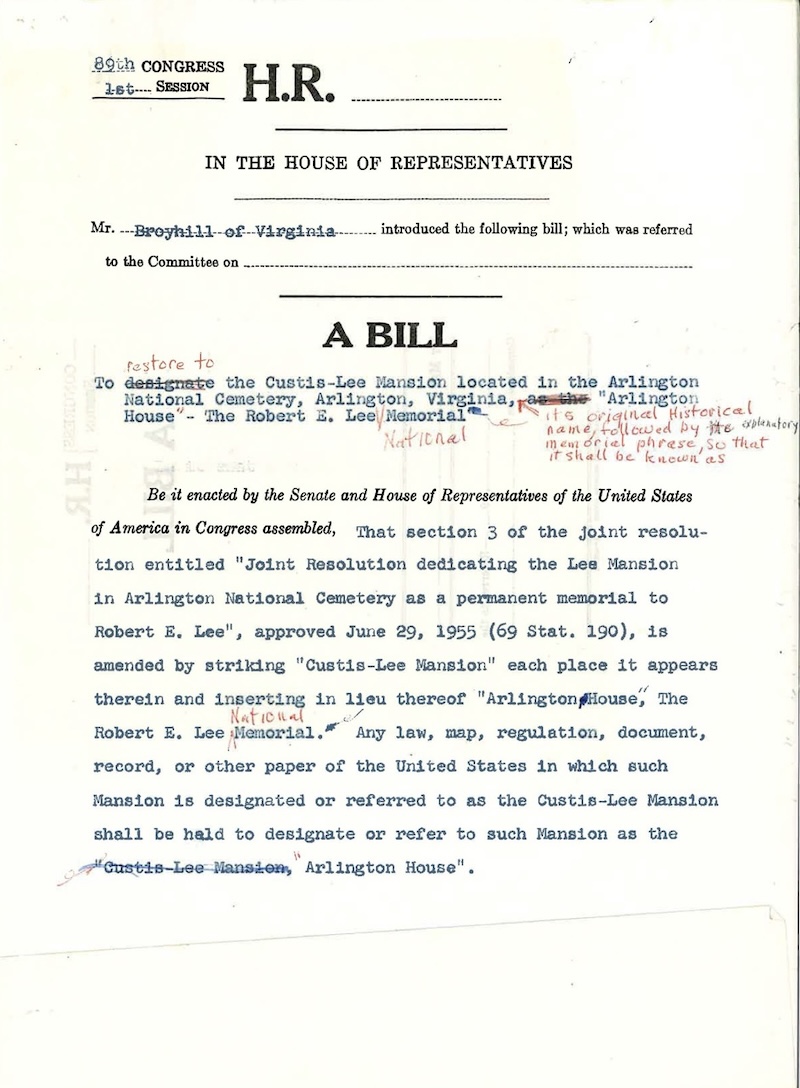
(Figure 5: An annotated first draft of the resolution Broyhill introduced in 1965 shows how the name of Arlington House evolved through the legislative process. This draft never passed as written. Source: Broyhill Papers, George Mason University.)
The back-and-forth editing would continue with Broyhill’s reintroduction of the legislation in each new session of Congress. But in 1965, 1967, and 1969, the resolution—no matter how it was worded—suffered a similar fate. It was referred to a committee and never made it to the House floor.
This delay frustrated the Society of the Lees—and Templeman, above all. At one point in 1971, Templeman even hand-delivered a letter personally to Broyhill’s house, urging him to push things forward. Still, not until 1972 would the path for Broyhill’s and Templeman’s resolution be cleared, with the successful passage of H.R. 10595 in June 1972, on the eve of the Watergate scandal that would soon envelop the nation.
H.R. 10595 declared that the mansion would now be known as “Arlington House, The Robert E. Lee Memorial,” which remains its official name today. Initially, the resolution had used that full name in the body of the text, while the last line had directed maps and official records to use only “Arlington House” (as Templeman and Lee descendants had apparently preferred). Yet a final amendment of the resolution in committee restored the preference of the Department of the Interior to use the full phrase “Arlington House, the Robert E. Lee Memorial” consistently throughout the resolution. And that slight change ensured that, even today, the mere mention of the site’s name in official publications still requires a permanent salute to Lee.
In sum, a small group of Lee descendants had finally prevailed in stamping their preferred name on Arlington House. But they had succeeded less through a groundswell of national demand or Congressional consensus than through their dogged persistence as lobbyists, refusing to let Rep. Broyhill forget about the bill or let it die in committee. As Templeman exulted in a letter to Rep. Broyhill on July 15, 1972, after the final resolution’s passage, “You have now proved to me that perseverance does pay, if one is fighting for a worthy cause.”27
She was right about perseverance. But was the cause worthy? Or could a different choice have been made?
Looking Forward
As I have argued in this post, the history of Arlington House since the Civil War has been complex and contested. Its interpretation as “The Robert E. Lee Memorial” was not a foregone conclusion after the Civil War. That interpretation was a choice, and it had regrettable consequences, not least by obscuring the histories of all who once lived and labored at the house. Looking forward now with these important facts at hand, the question before us becomes: What can be done to educate and inspire new generations, as well as to repair and heal the ongoing divisions in our country that date back to slavery and the Civil War?
Today, a much broader group of descendants associated with Arlington House believes that change can begin with how we define and interpret historic sites like this one and how we use them to bring people together. Their efforts at Arlington House in particular raise the questions of what counts as “a worthy cause” and who gets to be included in the conversation around and interpretation of a plantation house. They are also challenging the idea that interpreting the site as a national memorial to Robert E. Lee can truly unite the nation in 2026, if indeed it ever could.
To be sure, almost all of those who advocated for the Lee memorial between 1955 and 1972 claimed that their efforts were about promoting national unity and reconciliation, just as the earlier movement in the 1920s had. Lee partisans therefore denied the very existence of any dissent from a cause they believed was worthy: national togetherness. As Templeman had exclaimed in the letter she delivered to Broyhill’s home in 1971, urging him to revive a flagging legislative effort to restore the name of Arlington House, “NO ONE HAS EVER OFFERED ANY OBJECTIONS TO THE BILLS.”28
But in truth, as we have seen, many Americans had objected to turning Arlington House into a Lee memorial from the very beginning. Pushing the memorial effort forward had, at each step, depended on the exclusion of critical voices from the conversation about the site—especially the voices of African Americans and descendants of the enslaved people who had lived and labored at Arlington House. Each of the resolutions surveyed above had been pushed forward by a relatively small number of people, especially Confederate heritage groups and organized Lee descendants, rather than through a robust national discussion about the proper name and full history of the site.
Indeed, although Templeman and Broyhill promoted the 1972 name change as a simple, semantic correction in the interest of historical accuracy, the elevation of “The Robert E. Lee Memorial” into the official title of Arlington House can also be seen as a culminating victory for the half-century campaign to single out Lee at the site, a legislative effort that began with the UDC and Sons of Confederate Veterans in the 1920s. No wonder that among the groups that endorsed Broyhill’s bill, according to a committee hearing, were not only the Society of the Lees of Virginia, the Republican Women’s Club of Arlington, and the Robert E. Lee Memorial Foundation—but also the United Daughters of the Confederacy.29
Finally, as from the beginning, the struggle to make “Arlington House” into “The Robert E. Lee Memorial” had required removing or diminishing counter-memories of slavery at the site and in the nation. In a book about the various homes of the Lees published in 1975, Templeman herself would repeat the idea that “Mr. and Mrs. Custis had a strong feeling of responsibility for their negro servants,” while she left unspoken the Confederacy’s defense of chattel slavery and Lee’s complicity in it.30
More important to Templeman was that “the qualities of greatness which Robert E. Lee possessed” would be permanently recognized at a site whose 1972 renaming she had championed. “Having for some years been erroneously called ‘The Lee Mansion,’ and later, ‘The Custis-Lee Mansion,’ its authentic original historical name, used and loved by the Custis and Lee families, has been officially restored to ‘Arlington House, the Robert E. Lee Memorial.’ This title,” Templeman concluded, “places the name of LEE in its proper context.”31
But the question that Congress, groups like the Society of the Lees, and all Americans must confront today is whether “the name of LEE” is the only one that should be singled out at the house where he once lived. What is the proper context in which that name should be placed? And are descendants of the Lees the only family who should have a say in the site’s ongoing interpretation?
For most Americans, of course, this question is not primarily a family affair. But because of the way Lee has long been held up as a symbol of national reunion, all Americans have a stake in the question, too. If one goal of a national memorial is to bring the nation together in shared patriotism and purpose, it is proper to ask whether a site called “Arlington House, the Robert E. Lee Memorial” can ever achieve that goal.
Surely, in the nation’s semiquincentennial year, it should be abundantly clear that Robert E. Lee simply cannot serve as a unifying figure in a modern, multiracial democracy. Lee could not even keep the co-sponsors of the 1955 legislation on Arlington House together—while Broyhill signed the Southern Manifesto, Kefauver became one of only three Democratic senators from the former Confederate states who did not sign. As historian Gaines Foster has put it in a recent review of Lee in history and memory, “If Lee ever merited inclusion in a national pantheon of heroes, he does not in a nation seeking racial reconciliation and an end to white supremacy,” because “Lee made no positive, much less historic, contribution to those causes.”32
This does not mean that Lee’s own history at Arlington House should or can be erased from the site. But today, “The Robert E. Lee Memorial” can be removed by Congress from its official name, and the National Parks Service can be instructed to ensure that the histories of all who lived and labored there are told and preserved.
And perhaps it is even time, one hundred years after they were taken down, to restore to Arlington’s walls the wisdom of Robert Ingersoll’s forgotten lines from 1876.
No good can come from denying slavery’s atrocities or the fact that they were long “done under our own beautiful banner of the free,” as Ingersoll acknowledged. Under the same flag, however, others charted a different way and are still on the march toward liberty and justice for all. Redesignating Arlington House as a National Historic Site, while seemingly small in the grand scheme of events, would be one, long overdue way for Americans to advance that march.
Notes
-
A resolution to accomplish this was first introduced in 2020. Congressman Beyer re-introduced legislation in February 2025 as House Joint Resolution 63. And on February 4, 2026, Senator Kaine re-introduced an identical joint resolution in the Senate. ↩
-
W. Caleb McDaniel, “Slouching Towards Arlington House,” Journal of the Civil War Era 16, no. 1 (March 2026): 68-81. ↩
-
On “kinkeepers,” see Hilary N. Green, Unforgettable Sacrifice: How Black Communities Remembered the Civil War (New York: Fordham University Press, 2025). ↩
-
Karl Decker and Angus McSween, Historic Arlington: A History of the National Cemetery from its Establishment to the Present Time, with Sketches of the Historic Personages who Occupied the Estate Previous to its Seizure by the National Government—Parke Custis and His Times—The Career of Lee, with Descriptions of Life in Virginia during the Early Part of the Century (Washington, D.C.: Decker and McSween, 1892), 88, 103. See also John B. Osborne, The Story of Arlington (Washington, 1899), 87-89. ↩
-
A later source suggests that the War Department had ordered the posting of the speech at every national cemetery. See “Ingersoll’s Speech to Stay in Arlington,” Washington, D.C., Evening Star, June 4, 1926, 34, on Newspapers.com. See also M. Keith Harris, “Slavery, Emancipation, and Veterans of the Union Cause: Commemorating Freedom in the Era of Reconciliation,” Civil War History 53, no. 3 (September 2007): 264-290, esp. 287-288; Paul Stob, “Sacred Symbols, Public Memory, and the Great Agnostic: Robert Ingersoll Remembers the Civil War,” Rhetoric and Public Affairs 19, no. 2 (June 2016): 275-306. ↩
-
Allan Farquhar, “A Disgrace to Arlington: Let it Be Removed—at Once and Forever!,” Baltimore Sun, May 11, 1897, on Newspapers.com. ↩
-
“The Inscription at Arlington: The Unjust Picture of Southern Life by Col. Bob Ingersoll,” Columbia, S.C., State, January 26, 1903, on Newspapers.com. ↩
-
“Southerners Say Nay: Object to Ingersoll’s Speech Being Retained in National Cemetery,” Chicago Evening Post, reprinted in Washington, D.C., Herald, November 18, 1909, 6, on Newspapers.com; “A Reasonable Request,” Macon Telegraph, November 28, 1909, 4, on Newspapers.com. See also John A. Crowley, “Ingersoll’s Speech,” Alexandria (Va.) Gazette, December 1, 1909; “Ingersoll’s Speech on Wall of Lee’s Home,” Confederate Veteran 18 (1910), 118. For the letter to Taft, see file 1989 in William H. Taft Papers: Series 5: Executive Office Correspondence (Presidential Series No. 1), 1909-1910; 1939-2127, Library of Congress online. ↩
-
Elihu Root to Clarence J. Owens, March 25, 1903, file 1989 in William H. Taft Papers: Series 5: Executive Office Correspondence (Presidential Series No. 1), 1909-1910; 1939-2127, Library of Congress online. The same file contains information about the other protests the War Department had received since 1903. ↩
-
“Chap. 562–Joint Resolution Authorizing the restoration of the Lee Mansion in the Arlington National Cemetery, Virginia,” Statutes at Large of the United States of America, from December, 1923, to March, 1925 … Vol. 23, Part 1 (Washington: Government Printing Office, 1925), 1356. See Michael B. Chornesky, “Confederate Island upon the Union’s ‘Most Hallowed Ground’: The Battle to Interpret Arlington House, 1921-1937,” Washington History 27, no. 1 (Spring 2015): 20-33; Karen Byrne Kinzey, “Battling for Arlington House: To Lee or Not to Lee?” Arlington Historical Magazine (October 2003), 21-30. ↩
-
David W. Blight, Race and Reunion: The Civil War in American Memory (Cambridge, Mass.: Harvard University Press, 2001). ↩
-
Restoration of Lee Mansion: Hearing before the Joint Committee on the Library, Congress of the United States, Sixty-Eighth Congress, First Session, Pursuant to H.J.Res.264, Authorizing the Restoration of the Lee Mansion in the Arlington National Cemetery, Virginia, May 28, 1924 (Washington: Government Printing Office, 1925), 6. Confederate groups also were upset about some bronze tablets that had been installed at the house in 1896 giving the history of the surrounding property and its confiscation during the Civil War. The text on those tablets can be found reproduced in “A Day Spent at Arlington,” Norwich Bulletin (Norwich, Conn.), May 31, 1913, on Newspapers.com. ↩
-
The National Commission of Fine Arts, Tenth Report, July 1, 1921-December 31, 1925 (Washington, D.C.: Government Printing Office, 1926), 64; Kinzey, “Battling for Arlington House.” For protests about Arlington House, see “Nip and Tuck,” Baltimore Afro-American, February 27, 1926; Journal of the Sixtieth National Encampment, Grand Army of the Republic, Des Moines, Iowa, September 19 to 25, 1926 (Washington: Government Printing Office, 1927), 113-114, 127, 150. ↩
-
“Ingersoll Speech in Lee Home Termed False Attack on South: Rankin Protests Continuance of Document in Arlington Mansion on Ground it Opposes All Confederate General Stood For,” Baltimore Sun, May 21, 1926, 2; “Ingersoll’s Speech to Stay in Arlington”; “Gens. Lee and Jackson Honored at Ceremonies,” Washington Post, January 20, 1928. ↩
-
Charles W. Snell, Historic Structure Report, Historical Data Section, Arlington House, The Robert E. Lee Memorial, 2 vols. (Denver: National Park Service, 1985), 1:192. See also the memo from L. H. Bash, War Department, to Quartermaster Supply Officer, May 29, 1929, at War Dept Letter dated May 29, 1929, at the back of volume 2 of this Historic Structure Report, which offered the detailed instructions for beginning the restoration process and removing materials. ↩
-
On the involvement of formerly enslaved women in the restoration, see, for example, U.S. Quartermaster’s Corps, Arlington House and Its Associations (N.p., 1932), on the Internet Archive; “Lee Mansion Shrine Grows,” Norfolk, Va., Ledger-Star, April 22, 1930, on Newspapers.com. ↩
-
Enoch Aquila Chase, “The Restoration of Arlington House,” Records of the Columbia Historical Society, Washington, D.C. vol. 33/34 (1932): 252-254, on JSTOR. ↩
-
National Park Service, Lee Mansion National Memorial, Arlington National Cemetery, Virginia (N.p.: Department of the Interior, 1948), online. The line about Custis appears to have been lifted, without attribution, from Rose Mortimer Ellzey MacDonald, Mrs. Robert E. Lee (Boston: Ginn and Company, 1939), 126. ↩
-
For examples of this title being used, see Virginia State Chamber of Commerce, Virginia Autumn Travelogue (1935), on HathiTrust; Glimpses of Historical Areas East of the Mississippi River administered by the National Park Service (Washington, D.C.: Government Printing Office, 1937), 44; Ned J. Burns, Field Manual for Museums (Washington, D.C.: Government Printing OFfice, 1941); Randle Bond Truett, Lee Mansion (New York: Hastings House, 1943); Murray H. Nelligan, “Old Arlington: The Story of the Lee Mansion National Memorial” (Ph.D. diss., Columbia University, 1953), 1, 504. As late as 2006 the ARHO site-specific newsletter included a line in its timeline of significant dates from March that “Congress approved legislation authorizing the restoration of Arlington House as the ‘Lee Mansion National Memorial’” in 1925. As late as 2012, similar language appeared on a placard in the Lee museum on the site. ↩
-
“Broyhill Campaigns ‘On Record,’” Washington Post, September 16, 1954; “Broyhill Tells Why He Signed the Manifesto,” Washington Post, June 10, 1956. See also “Joel T. Broyhill, 86, Congressman Who Opposed Integration, Dies,” New York Times, October 4, 2006. ↩
-
“3 Dixie Congressmen Assail Democrats before Young GOP,” Washington Post, January 13, 1955. See also “Broyhill Sees Socialism Threat in ‘56,” Washington Post, February 8, 1955; “Broyhill Says Communists Back Democrats,” Washington Post, September 19, 1954. ↩
-
“Davis Committee Report Signers Concede House Vote Will Fail,” Washington Post, December 30, 1956 (first and third quotations); “Letters to the Editor: Debate in Arlington,” Washington Post, November 3, 1956 (second quotation). See also “He’s Labeled Now,” Washington Post, December 31, 1956; “Broyhill Sees Socialism Threat in ‘56,” Washington Post, February 8, 1955; “Broyhill Seeks Ike Troop Parley,” Washington Post, October 11, 1957. On Broyhill’s support for the resegregation of D.C. schools, see Jason Morgan Ward, “The D.C. School Hearings of 1956 and the National Vision of Massive Resistance,” Journal of Civil and Human Rights 1, no. 1 (Spring/Summer 2015): 82-110. For his votes on civil rights legislation, see Joel T. Broyhill Papers, George Mason University Special Collections, Box 62, Folder 9. According to an exhibit by the Arlington Public Library, Broyhill also personally visited the home of Carrol Deskins, an African American firefighter, in 1959 and implied that he would lose his job if Deskins’s son attempted to integrate Arlington’s Stratford Junior High School. On the “Southern Strategy” in the Republican Party, see Kevin M. Kruse, “The Southern Strategy,” in Kevin M. Kruse and Julian E. Zelizer, eds., Myth America: Historians Take on the Biggest Legends and Lies about Our Past (New York: Basic Books, 2022), 169-196. ↩
-
“President Signs Lee Garden Bill,” Washington Post, August 19, 1959. ↩
-
“Let’s Call it Arlington House,” Northern Virginia Sun, January 7, 1961, on Virginia Chronicle; “Restoration of the Authentic, Original, and Historical Name to ‘Arlington House,’ The Robert E. Lee Memorial,” Magazine of the United Daughters of the Confederacy (June 1964), clipping in Broyhill Papers, Box 34, Folder 6. See also Templeman’s letter in Washington Post, July 24, 1969, also in Broyhill Papers, Box 34, Folder 6. ↩
-
See also “(The) History of Arlington,” Northern Virginia Sun, December 9, 1963, on Virginia Chronicle. ↩
-
See “Statement of Representative Joel T. Broyhill of Virginia before the Library and Memorials Subcommittee, Committee on House Administration, in Support of HR 10595, Tuesday, April 11, 1972,” in Broyhill Papers, Box 34, Folder 6. ↩
-
The documents cited in this and the preceding paragraphs come from the Joel T. Broyhill Papers, George Mason University Special Collections, Box 34, Folder 6. ↩
-
Templeman letter included in Joel T. Broyhill Papers, George Mason University Special Collections, Box 34, Folder 6. ↩
-
Other heritage groups, including several local chapters of the Daughters of the American Revolution, joined in endorsing the bill, as did historical societies including the Virginia Historical Society and the Cultural Heritage Commission of Arlington. See H. Rept. 92-1030, 92nd Congress, 2nd Session. ↩
-
Eleanor Lee Templeman, Virginia Homes of the Lees, rev. ed., fourth printing (Annandale, Virginia, 1975), available for download from The Society of the Lees of Virginia. ↩
-
Ibid. ↩
-
Gaines M. Foster, “The Marble Man, Robert E. Lee, and the Context of Historical Memory,” in The Limits of the Lost Cause: Essays on Civil War Memory (Baton Rouge: Louisiana State University, 2024), 190. ↩